How does Dutch government work?
Government, cabinet and Council of Ministers: the difference
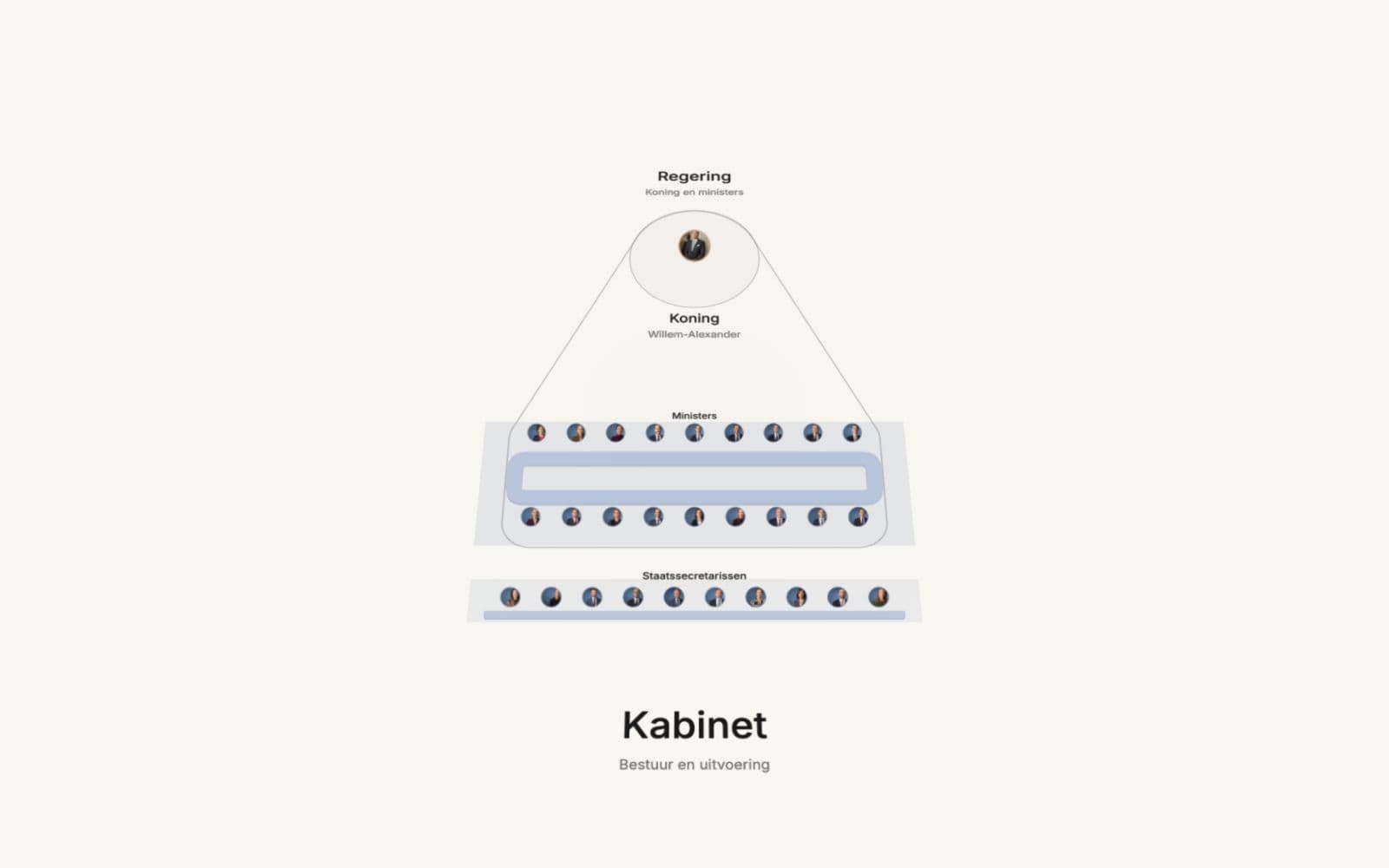
The government consists of the King and the ministers. The cabinet consists of ministers and state secretaries. The Council of Ministers consists of the ministers and is chaired by the prime minister. These three terms overlap, but each has a distinct meaning.
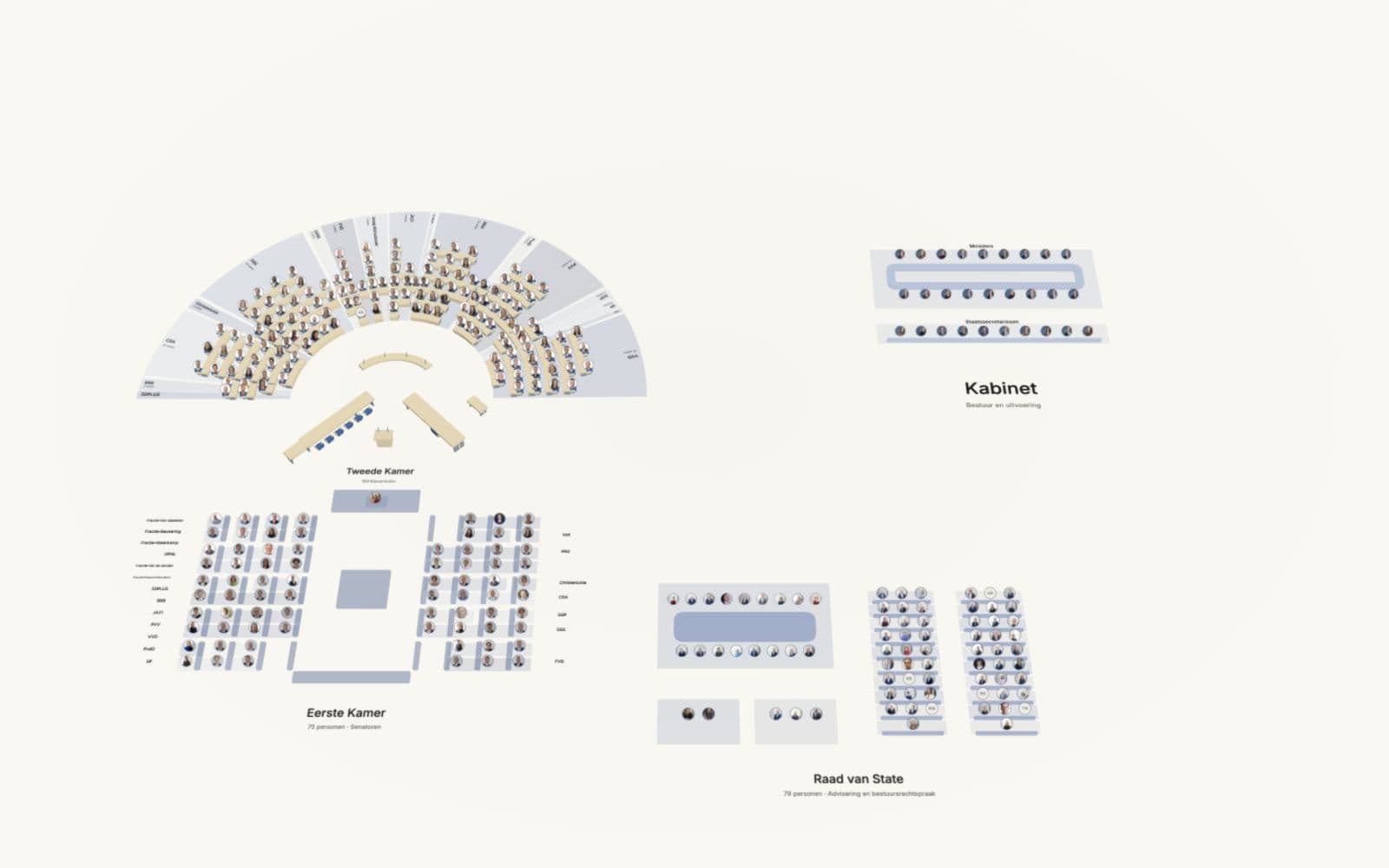
This distinction helps when reading a letter to parliament, a cabinet decision or a bill. On Staatskaart, you can explore the institutions alongside the ministers and state secretaries included in the register.
 Explore government and cabinet
Who bears political responsibility?
Ministers bear political responsibility for their policies and for the King’s actions. State secretaries have their own areas of responsibility and are accountable to parliament for them. They belong to the cabinet, but are not members of the government or the Council of Ministers. The exact allocation of duties between ministers and state secretaries therefore matters when working on a dossier.
Central government: government, cabinet and Council of MinistersRoyal House: ministerial responsibilityExplore the membership on Staatskaart
Open the Cabinet section and choose a listed minister or state secretary. Read the position and official source on the profile. Then go to Government, Ministers or State secretaries to see how these roles relate institutionally. The connection with parliament shows where political scrutiny takes place.
Use this order for an initial overview: institution, position, person, source. For a ministry, also check the allocation of duties between ministers and state secretaries. It shows which officeholder handles a particular area.
From an election to a new cabinet
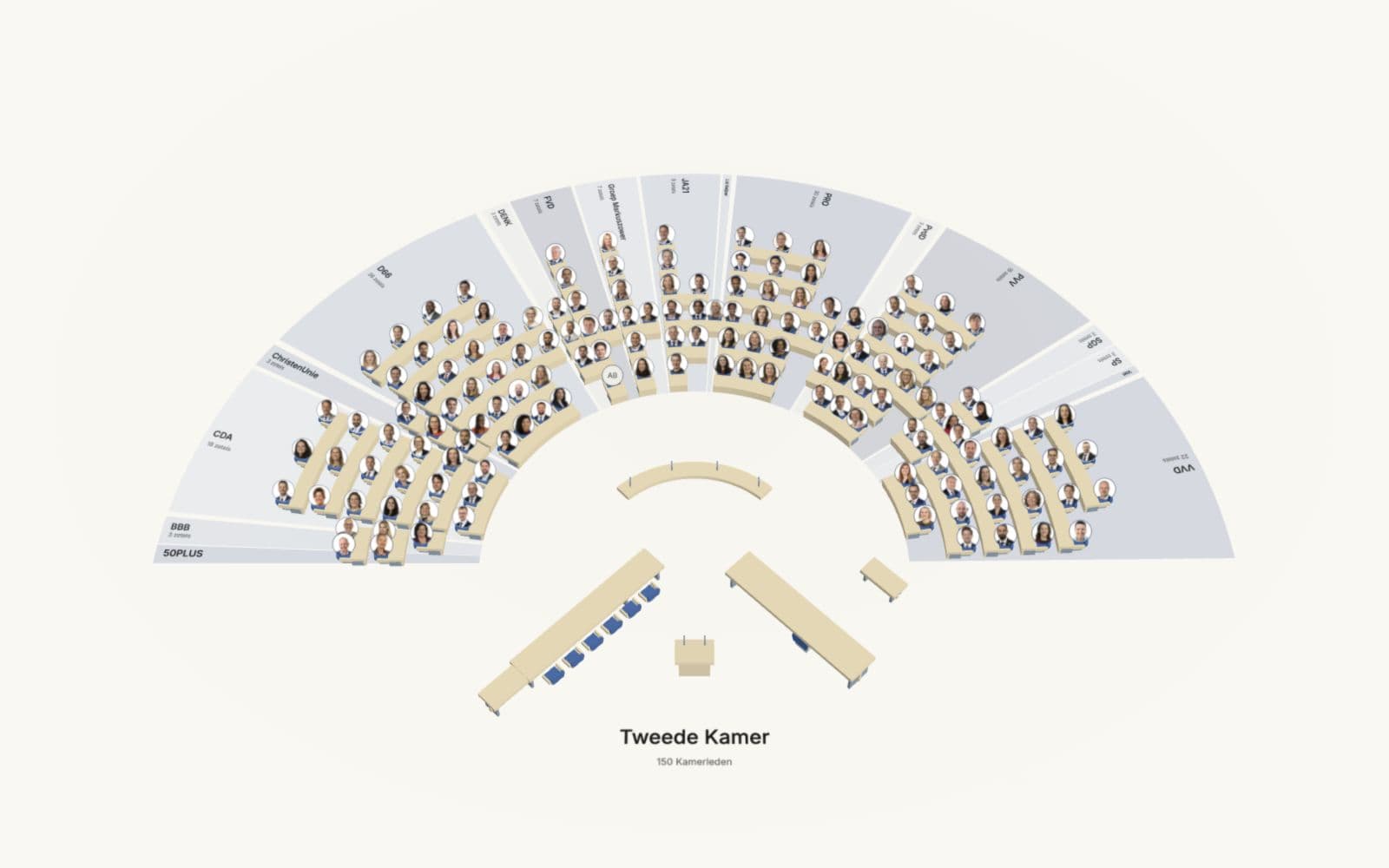
In House of Representatives elections, voters vote for parliamentary candidates. Cabinet formation follows, with negotiations about cooperation, policy and cabinet appointments. The House of Representatives directs the formation process. The election result and the final allocation of executive duties are therefore separate steps.
In a briefing, you can describe these steps separately: which House was elected, which cooperation was agreed and which portfolios were assigned. The map provides context; the official formation documents and allocations of duties support the specific outcome.
House of Representatives: elections and cabinet formationRoyal House: roles in cabinet formationWho holds the position now?
Ministers, state secretaries and portfolios can change during a cabinet’s term too. The registers state when the information was retrieved. Open the linked official page for the latest information on a position or appointment. In a career overview, start and end dates show the period during which someone held a position.
See where the information comes fromSources and further reading
This guide was reviewed on . Check the official sources for current information.
- Rijksoverheid — Regering, kabinet en ministerraad
- Het Koninklijk Huis — Ministeriële verantwoordelijkheid
- Tweede Kamer — Verkiezingen en kabinetsformatie
- Het Koninklijk Huis — Kabinetsformatie
Guide by Staatskaart, a Noord Labs project. Read how we work with sources and datasets.