How does Dutch government work?
Water boards: governance, duties and reserved seats
A water board handles tasks such as water level management, wastewater treatment and dyke management within its area. The general board sets policy and scrutinises the executive board. The dijkgraaf, sometimes called a watergraaf, is the chair.
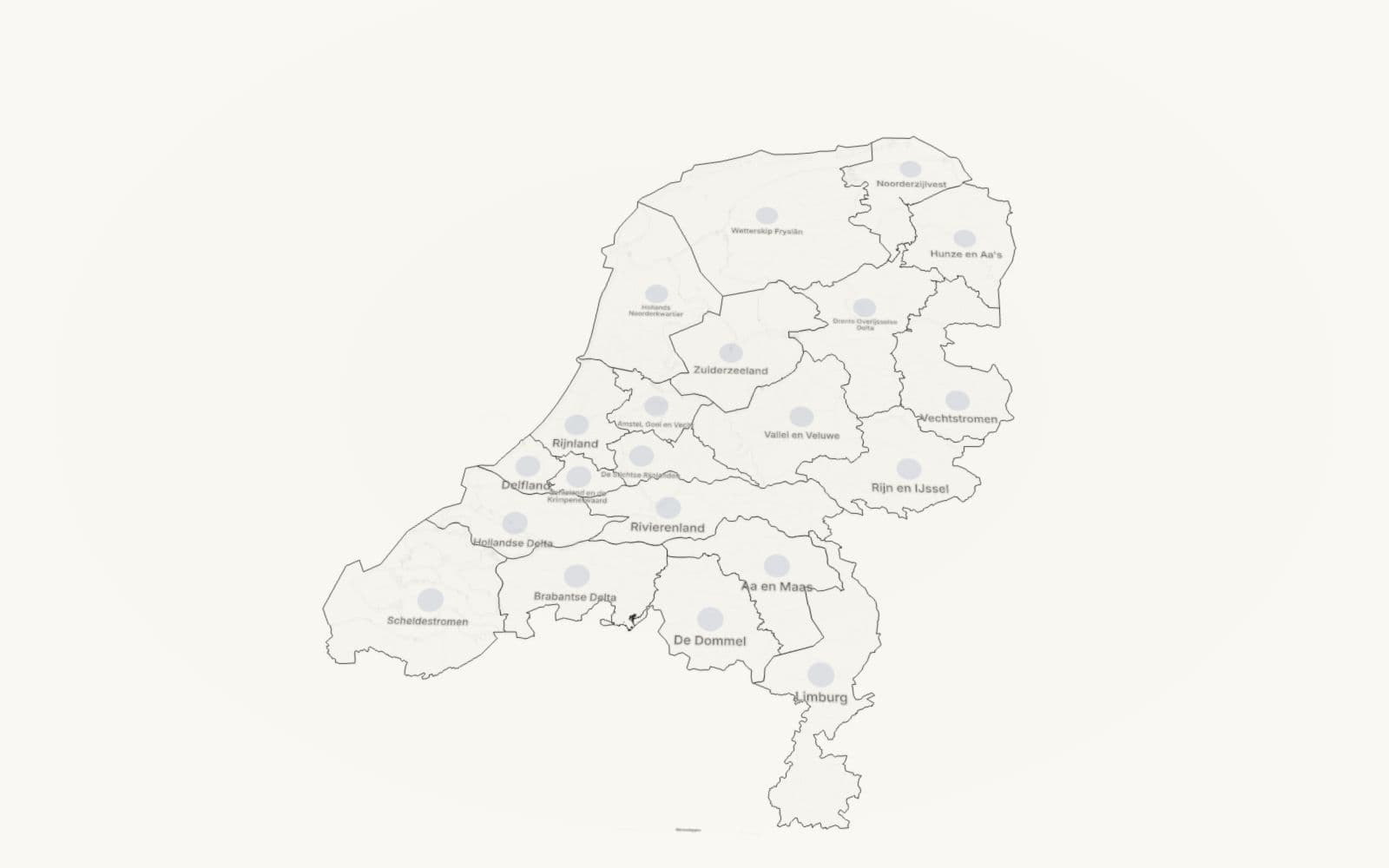
Staatskaart shows the 21 water board areas included and the available governance positions. The “Who takes care of our water?” tour connects governance roles with the choices behind everyday water management.
 Explore the water boards
Elected members and four reserved seats
Most of the general board is elected in water board elections. There are also four reserved seats: two for agricultural representatives and two for managers of natural areas. These representatives are appointed. Understanding the distinction between elected and appointed members is therefore part of reading a board overview.
The executive board prepares and implements policy. The dijkgraaf has voting rights on the executive board, but not on the general board. The government appoints this chair for six years.
Dutch Water Authorities: reserved seatsCentral government: water board governanceExplore your water board and its governance
Choose Water boards on the map and open an area. Look at the general board, executive board and chair in turn. Open available people entries to read their positions and sources. Also compare the water board area with the municipal and provincial maps: their boundaries do not necessarily coincide.
Start the water tour for a detailed example at Noorderzijlvest. Pause at the reserved seats or the relationship between the two boards to view the explanation and source.
Start the water governance tourUse for a spatial planning or water dossier
For a councillor or policy officer, a question about flooding starts with the area and the management involved. Water boards work with municipalities, provinces, Rijkswaterstaat and drinking water companies. Check the specific dossier to find which organisation is responsible for the task concerned. Then consult that organisation’s official plans, decisions and allocation of duties.
In a briefing, record separately who sets policy, who organises implementation and who scrutinises. This prevents every water-related question from being directed to a single administrative body.
Central government: duties and cooperationWhere does the data come from?
The boundaries come from geographic source files and have been simplified for the map. The sources page contains the original files and an explanation of that processing. For each water board, the people list states which positions are included, when sources were retrieved and which information is still missing.
Sources for water boards and boundariesSources and further reading
This guide was reviewed on . Check the official sources for current information.
- Rijksoverheid — Taken van een waterschap
- Rijksoverheid — Bestuur van een waterschap
- Unie van Waterschappen — Geborgde zetels
Guide by Staatskaart, a Noord Labs project. Read how we work with sources and datasets.