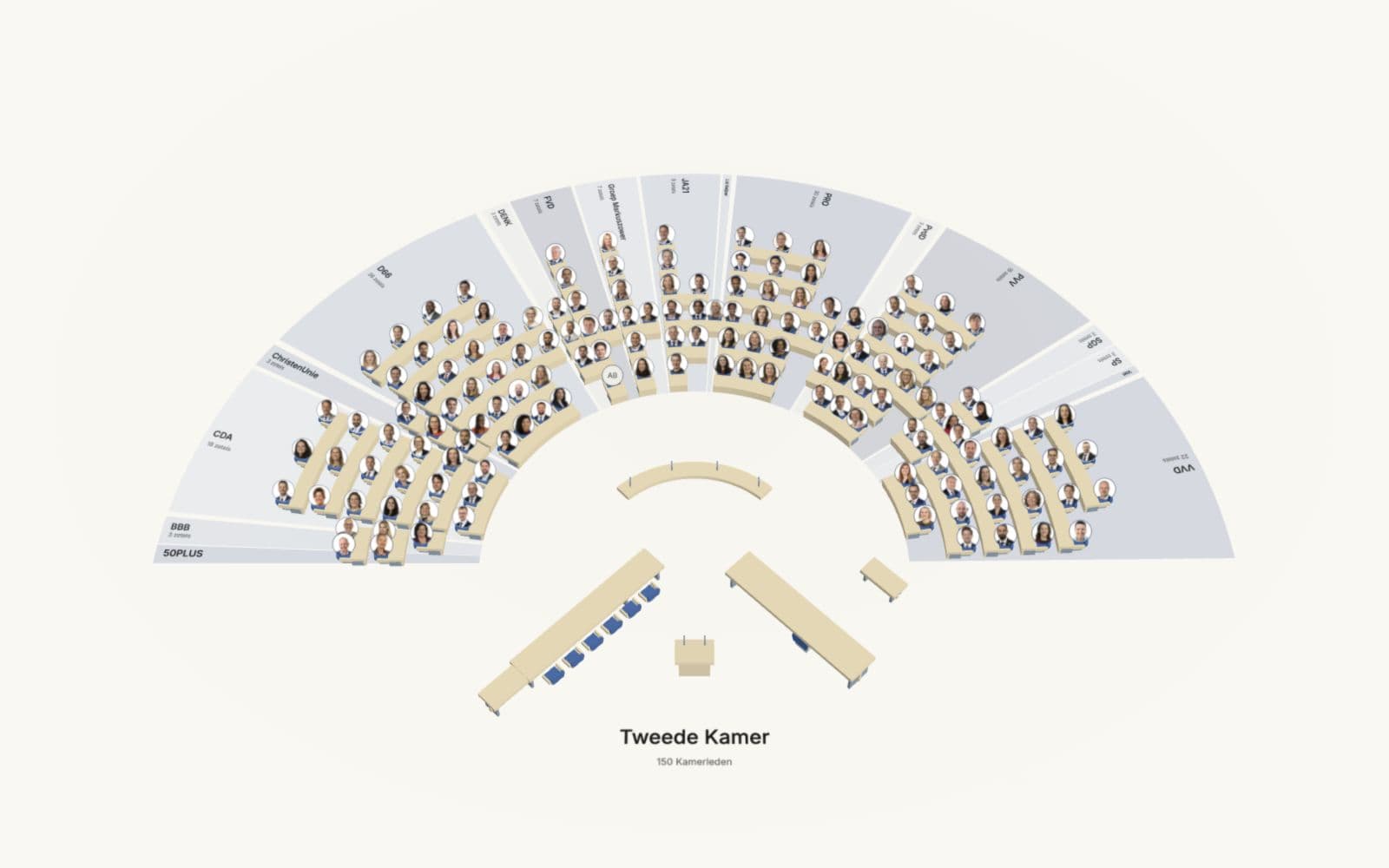
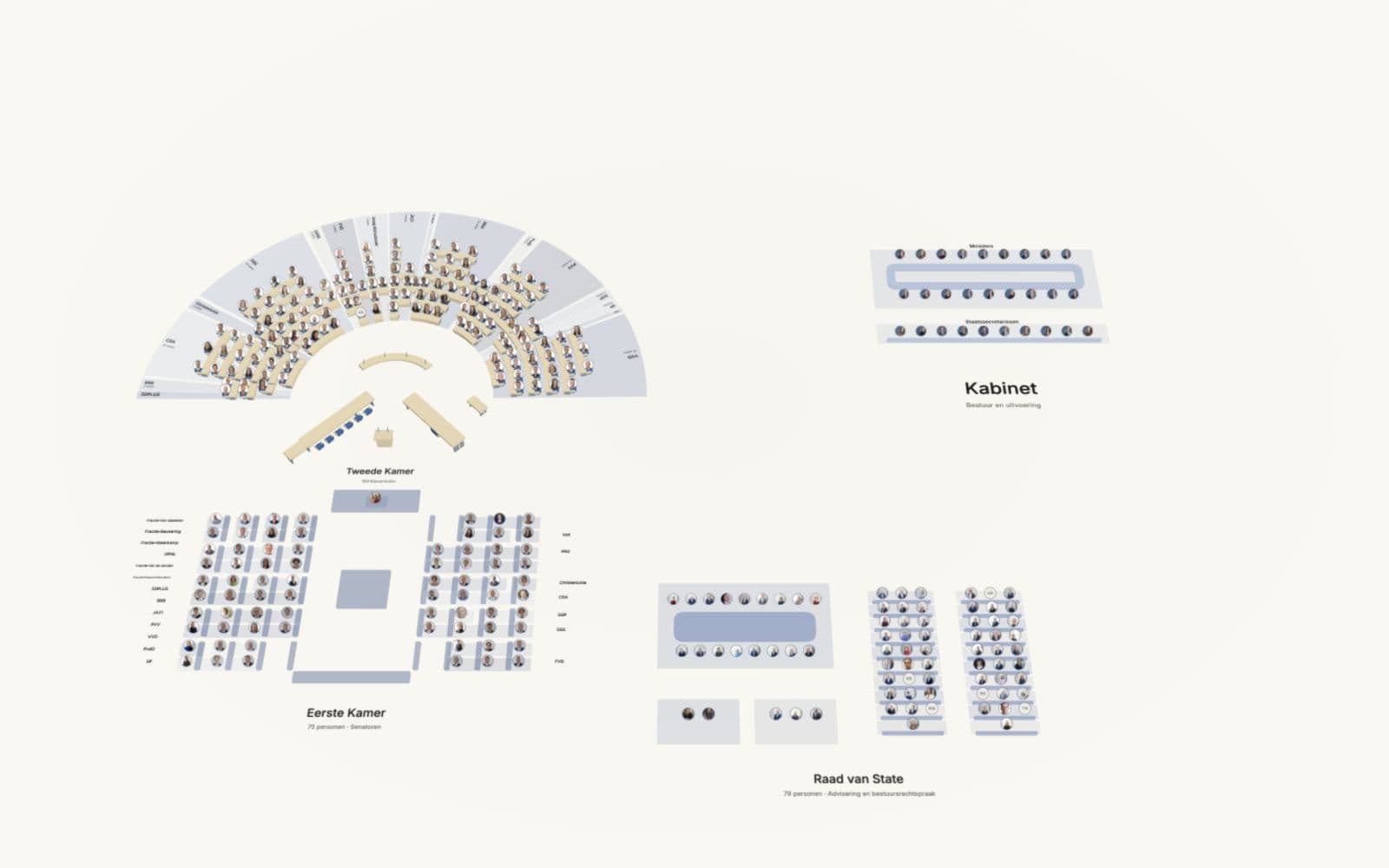
How does Dutch government work?
The Senate: election and scrutiny of legislation
The Senate (Eerste Kamer) has 75 members. They examine bills passed by the House of Representatives and scrutinise government policy. Senators can pass or reject a bill. They have no right of amendment, so they cannot themselves change the legislative text before them.
The Senate is elected indirectly. Staatskaart shows both the election route and the relationship with the House of Representatives and the government.
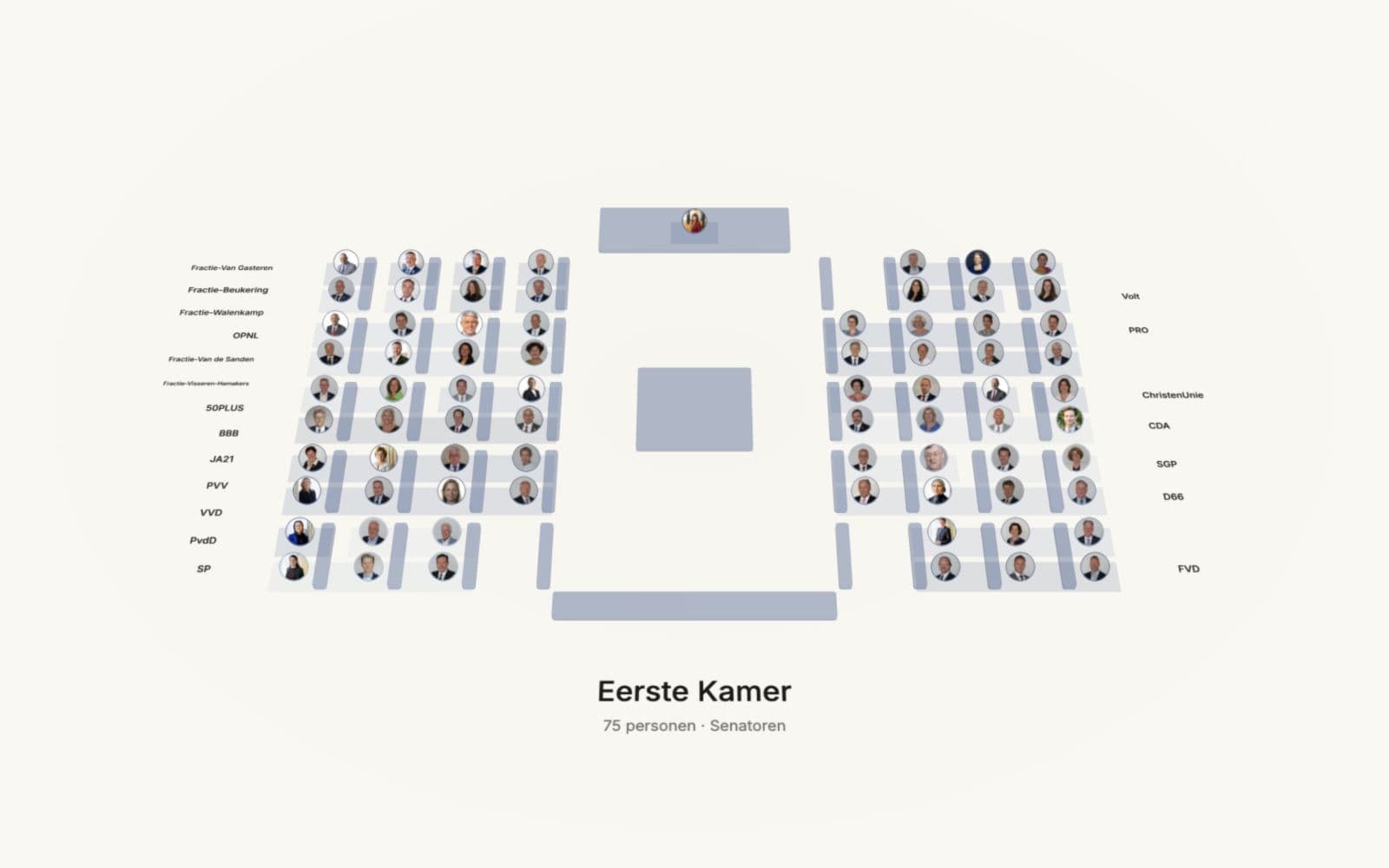 View the Senate on the map
Who elects the Senate?
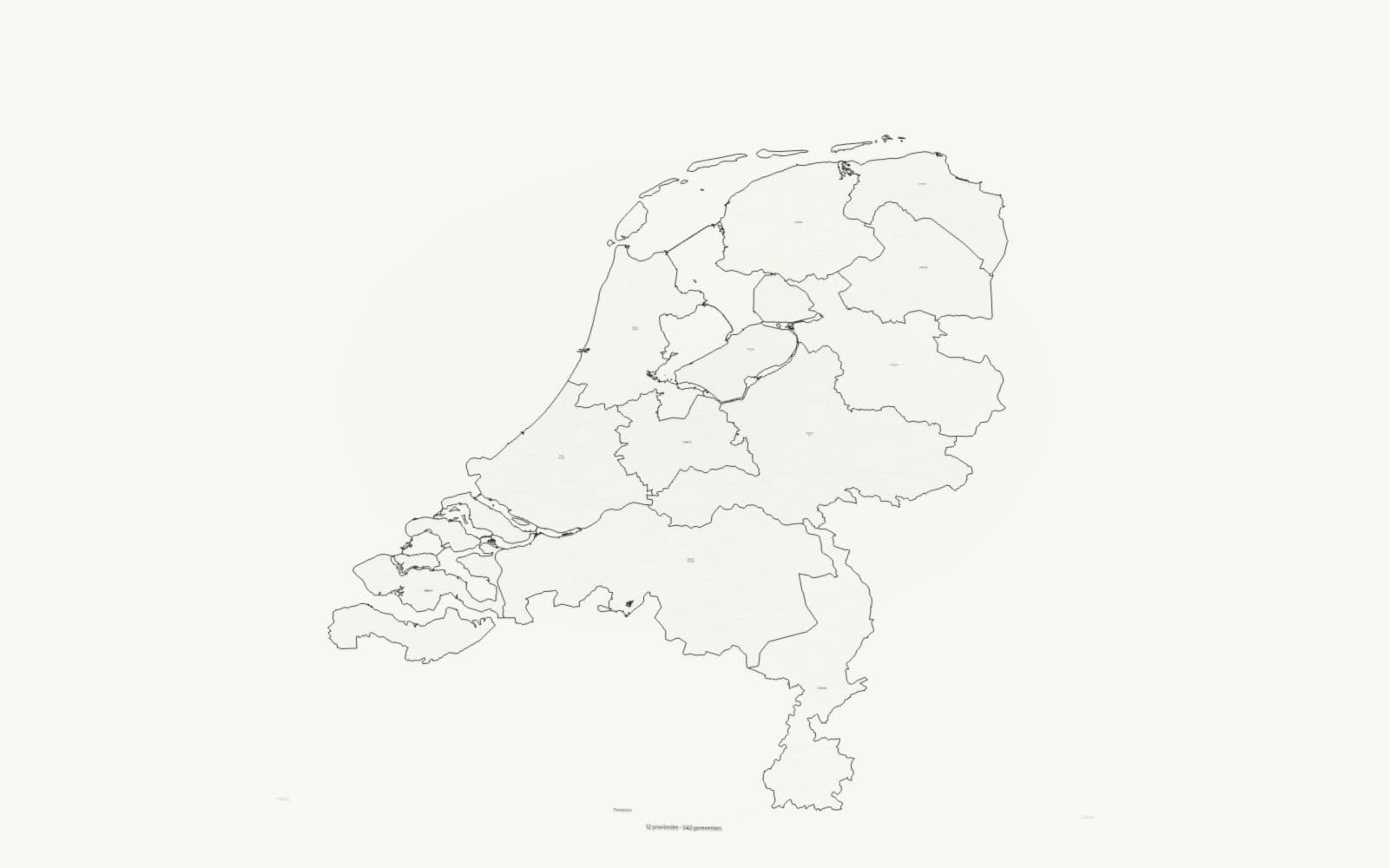
Members of the twelve provincial councils elect the senators together with four electoral colleges. Bonaire, Sint Eustatius and Saba each have their own electoral college. The fourth is the electoral college for non-residents, for which Dutch citizens abroad can register as voters. These colleges have a different function from the island councils.
Not every vote cast by a provincial councillor or electoral college member carries the same weight. Vote values take the represented population into account. For the electoral college for non-residents, the number of registered voters plays a role. Always use the vote values for the relevant election when making a calculation.
Electoral Council: four electoral collegesElectoral Council: calculating vote valuesFollow the election route on the map
Open the Senate and explore its relationships with the provincial councils and electoral colleges. Then start the “How the Senate is elected” tour. It moves from provincial representation and the electoral colleges to the weighted vote and the work of senators. Pause at a step to read its source.
Start the Senate tourWhat does this mean for a legislative dossier?
For staff, preparation starts with the text as passed by the House of Representatives. Read it alongside the Senate’s questions and the proposer’s answers. A commitment, a motion and a separate amending bill each have their own significance. The official dossier page is where you can check progress and documents.
Senate: legislation and scrutinyElection example and people register
The tour uses the 2023 election as an example. The names and positions of senators and provincial councillors come from the people register, with its own retrieval date alongside the source. The four electoral colleges appear on the map as institutions; their individual members are not yet included.
Sources and further reading
This guide was reviewed on . Check the official sources for current information.
- Eerste Kamer — Wat doet de Eerste Kamer?
- Kiesraad — Eerste Kamerverkiezing
- Kiesraad — Kiescolleges Eerste Kamer
- Kiesraad — Stemwaarde
Guide by Staatskaart, a Noord Labs project. Read how we work with sources and datasets.