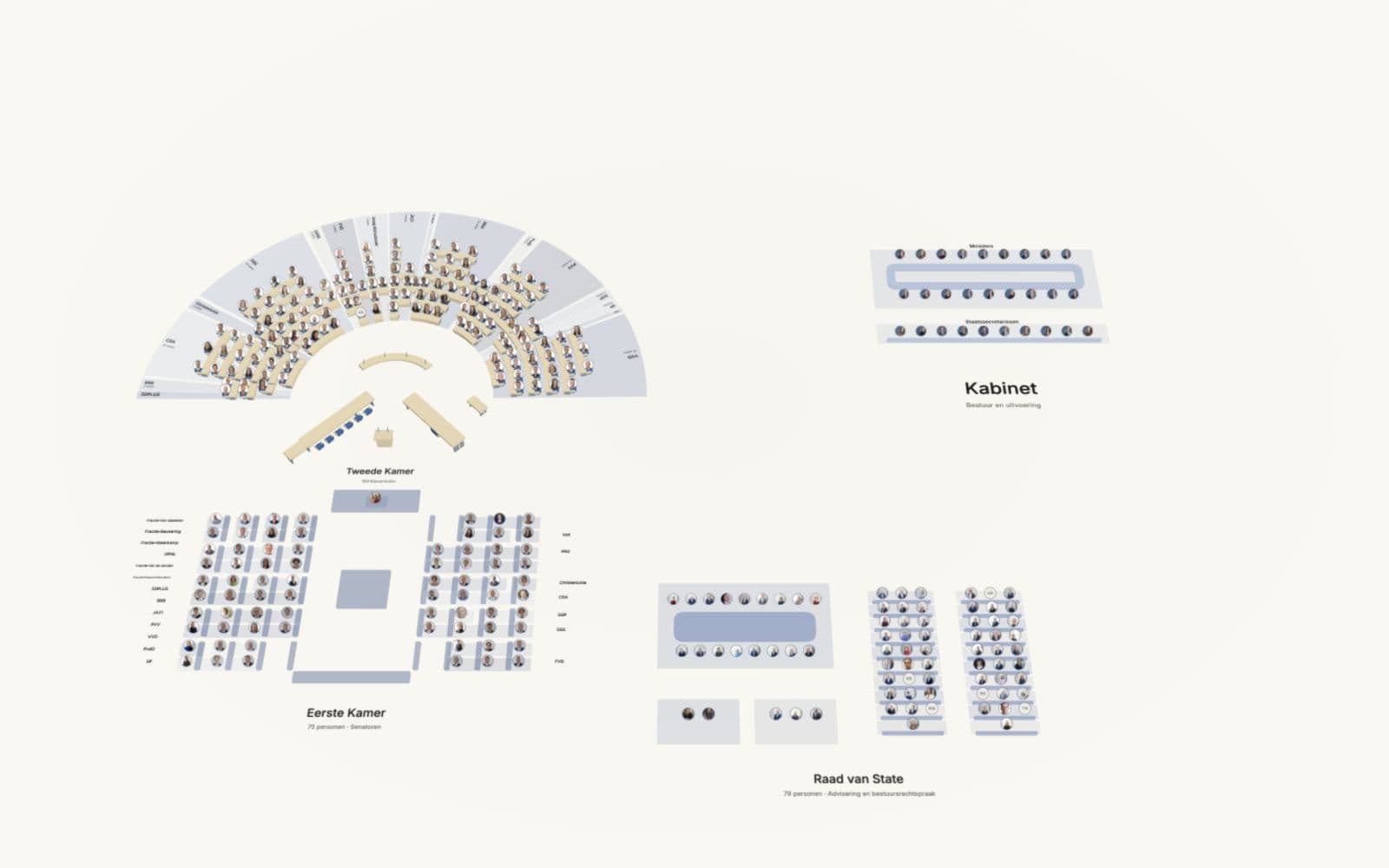
The Netherlands / United Kingdom
A parliamentary monarchy with a different voting system and devolved institutions.
Political system
- The Netherlands
- The Netherlands is a parliamentary democracy and a constitutional monarchy. The king is head of state; ministers bear political responsibility.
- United Kingdom
- The monarch is head of state; the prime minister leads the government. The government must command the confidence of the House of Commons.
Who governs?
- The Netherlands
- Parties usually negotiate a coalition. The cabinet comprises ministers and state secretaries and depends on parliamentary confidence. In Dutch constitutional terminology, the government means the king and ministers together.
- United Kingdom
- The monarch appoints the person able to command Commons confidence as prime minister. A government may rely on one party, a coalition or support from other parties.
Who makes laws?
- The Netherlands
- The House of Representatives and Senate scrutinize government. Both must approve ordinary legislation. The House can amend bills; the Senate can accept or reject them.
- United Kingdom
- The elected House of Commons and the unelected House of Lords examine legislation. Their powers differ: the Commons has primacy, including on public spending and government confidence.
Who do you elect?
- The Netherlands
- Voters directly elect the House through proportional representation. Provincial councils and electoral colleges elect the Senate. Voters do not directly elect the prime minister.
- United Kingdom
- Commons constituencies each elect one MP using first past the post. This differs from Dutch proportional representation, where a party’s share of votes largely determines its share of seats.
Closer to home
- The Netherlands
- Provinces, municipalities and water authorities have their own responsibilities and governing bodies. Their work includes spatial planning, local services and water management within national law.
- United Kingdom
- Scotland, Wales and Northern Ireland have devolved legislatures and executives, with different powers. Local councils also provide services. England has its own varied local and regional arrangements.